Practical R&D insights from custom cosmetic development for North‑American skincare brands
Abstract: GHK‑Cu (Copper Tripeptide‑1, blue copper peptide) remains one of the most sought‑after anti‑aging actives for premium skincare. While marketing frequently promotes high‑dosage copper peptide formulas, formulators face a stack of practical hurdles: complex stability risks, ingredient incompatibility, correct active‑level calculation for peptide blends, packaging constraints and synergistic active pairing. This article shares hands‑on technical problem‑solving work completed during custom R&D of a high‑potency GHK‑Cu revitalizing face cream for a US brand. We walk through real‑world questions raised by the client, our engineering analysis, test‑data‑backed conclusions and actionable formulation solutions for cosmetic developers and brand owners.
Many brands aim to differentiate their copper peptide product by pushing GHK‑Cu toward higher finished concentrations (target 1.5% finished, raw‑material loading 1.7%). Higher loading creates competitive marketing positioning — yet it magnifies well‑known stability risks: copper‑peptide chelate dissociation, rising free‑copper ion levels, colour drift, and loss of biological efficacy.
During this cream development project, our client submitted a detailed technical questionnaire covering concentration strategy, encapsulation & packaging, co‑active compatibility (bakuchiol, SYN‑AKE, conotoxin peptide, botanical extracts), pH and chelator restrictions. Below we organize the technical challenges, analysis workflow and validated recommendations for formulators.
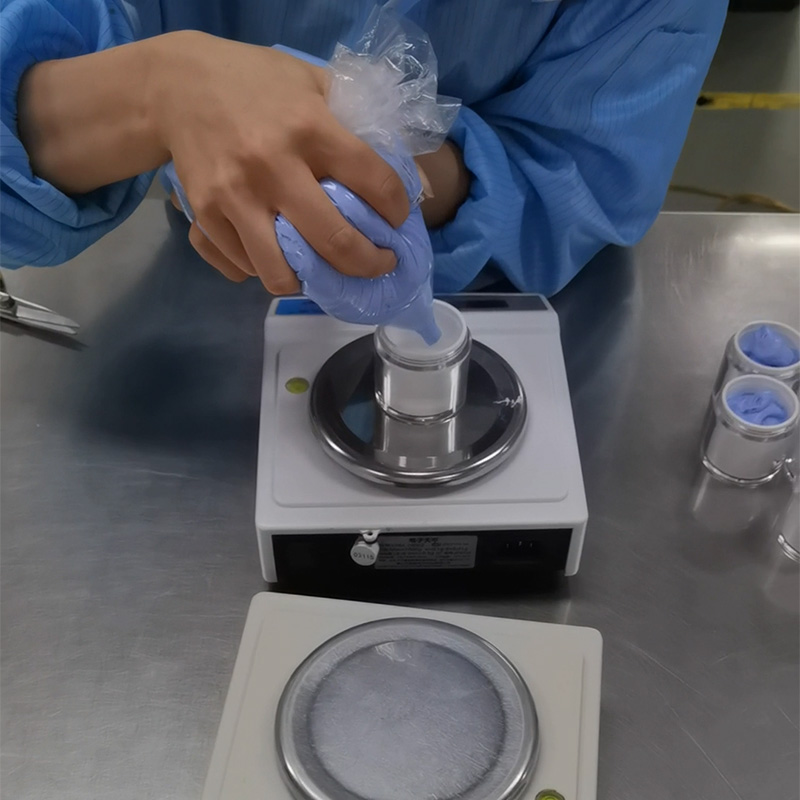
Client question:
We want to keep finished‑product GHK‑Cu at 1.5% as our key differentiator. If we source high‑purity, COA‑validated raw material plus encapsulation (liposome/micro‑encapsulation), can we mitigate stability risks without dropping concentration down to 1% like most market competitors? Are your concerns targeting concentration itself, or raw‑material purity and stability conditions?
The core risk at elevated loading is not concentration alone, but two linked variables: raw‑material purity & un‑chelated free‑copper ions, plus environmental triggers (light, temperature, incompatible excipients) that break the GHK‑Cu coordination complex.
Raw‑material prerequisite: Require batch‑specific COA confirming high‑purity GHK‑Cu, verified 1:1 copper‑peptide molar ratio, low free‑copper impurity. Poor‑grade crude peptide will generate excessive free‑copper ions even at moderate dosage, causing oxidation and colour shift.
Encapsulation strategy: Liposomal/micro‑encapsulation (the client‑proposed encapsulation method) effectively shields GHK‑Cu from matrix interferences.
Packaging & storage controls for 1.7% loading:
Mandate opaque non‑transparent PET bottle + airless vacuum pump / press‑type pump packaging.
Light exposure is the major driver for colour change and free‑copper ion accumulation. Avoid transparent/amber clear containers.
Recommend low‑temperature storage throughout shelf life to retain full biological potency, preventing efficacy drop‑off during product lifecycle.
Conclusion: High finished concentration (1.5%) is technically feasible, provided high‑purity starting material, encapsulation protection, light‑blocking airless packaging and proper storage protocols are implemented simultaneously. It is not necessary to automatically reduce dosage to 1% unless stability testing fails these controls.
Client question:
Is the recommended 0.5% bakuchiol driven by irritation risk of bakuchiol itself, or chemical interaction between bakuchiol and GHK‑Cu within this cream matrix? Can 1% bakuchiol work in this formula?
Internal human clinical test data demonstrates that 0.5% bakuchiol delivers measurable anti‑aging performance:
Crow’s‑foot wrinkle volume:‑11.53%; under‑eye wrinkle volume:‑7.71%
Crow’s‑foot wrinkle area:‑10.57%; under‑eye wrinkle area:‑7.98%
0.5% also delivers proven moisturizing effect (+48.29% skin hydration) and barrier‑repair benefit (‑20.16% TEWL reduction) from our test panel data.
The 0.5% guidance primarily reflects clinically validated efficacy threshold of bakuchiol, rather than a direct chemical incompatibility with GHK‑Cu.
Practical recommendation: 1% bakuchiol loading is chemically compatible within this high‑GHK‑Cu system. Our R&D proposal prioritizes 0.5% to guarantee robust clinical anti‑aging results while balancing skin tolerance, and allows 1% as optional higher‑potency variant for brands seeking stronger actives, with mandatory stability & irritation safety testing. Bakuchiol and GHK‑Cu can function synergistically for comprehensive anti‑aging outcomes.
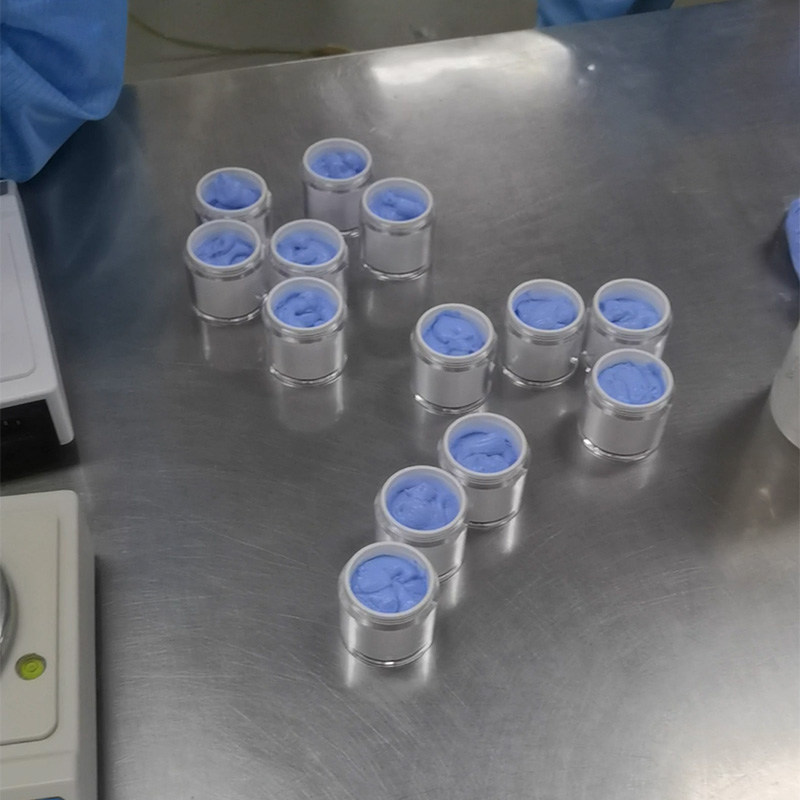
Client question:
Our formula contains Dipeptide Diaminobutyroyl Benzylamide Diacetate (SYN‑AKE), but current specification lacks clear concentration. What target range should we adopt?
A very common formulation trap with commercial peptide raw materials: many peptide raw materials are pre‑diluted in solvent/glycerin matrix. The % addition on your batch sheet is raw‑material addition rate, NOT pure‑peptide active concentration.
Our technical standard:
Maximum pure‑active concentration for SYN‑AKE = 200 ppm.
Recommend pure‑active target: 0.02% (200ppm) calculated on actual peptide substance.
When working with diluted commercial SYN‑AKE raw material, your batch addition will shift to 0.05%‑0.1% raw‑material addition — but even at 0.1% raw material addition, the real pure‑peptide content still tops out at 200 ppm maximum allowable active level.
Key takeaway for developers: Always distinguish raw‑material addition percentage vs pure‑peptide ppm value. The recommended effective‑active window remains unchanged; adjust raw‑material usage percentage according to your supplier’s raw‑material activity specification.
Client question:
Before adding conotoxin‑mimic peptide, we need two clarifications: (1) are you referencing synthetic conotoxin‑mimicking peptide analogues (like XEP‑018) or snail‑mucin filtrate? (2) Given past incompatibility risks with cysteine/disulfide‑bond‑containing ingredients and GHK‑Cu, does this peptide create copper‑chelating or redox risks?
Formulation reference applies exclusively to synthetic conotoxin‑mimetic peptide (XEP‑018‑type commercial cosmetic peptide), not snail‑secretion filtrate; these two materials are functionally and chemically distinct.
Liquid commercial conotoxin peptide raw material suggested addition range is 1‑3% raw‑material dosage. Again, this is liquid‑stock addition, not pure‑peptide concentration. The maximum pure‑active recommended usage level is capped at 20 ppm.
Risk assessment reminder: Peptides carrying cysteine residues and disulfide bonds theoretically present potential copper‑interaction risk in GHK‑Cu systems. Before formal incorporation, run compatibility stability testing (monitor free‑copper ion levels, colour change, HPLC active‑peptide retention over accelerated‑storage cycles) to rule out redox or competitive‑chelation side‑effects. Do not rely only on literature prediction; bench stability verification is mandatory.
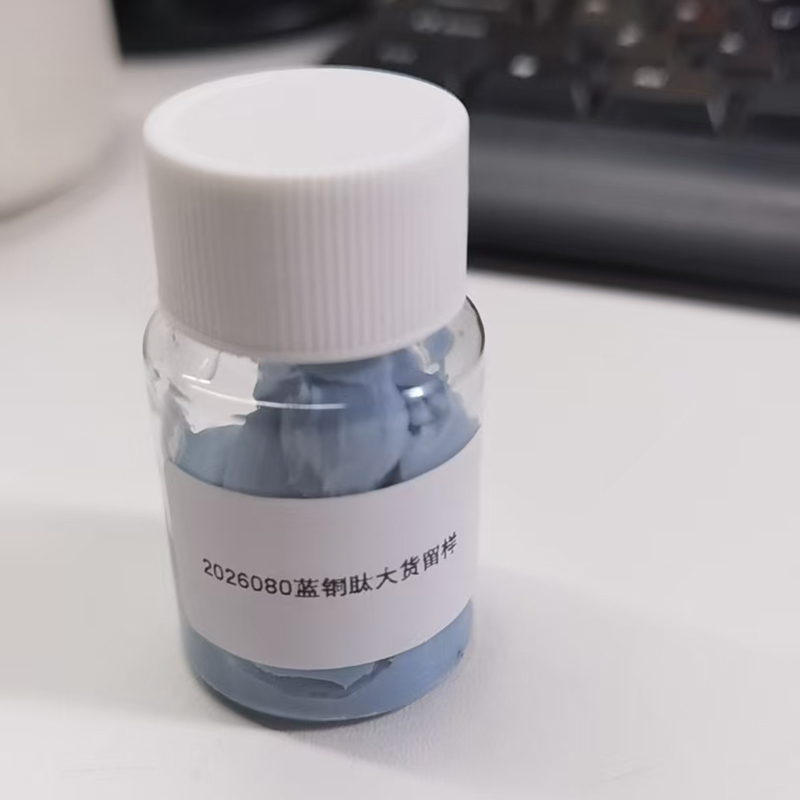
Client question:
Our existing formula includes Aloe Barbadensis Leaf Extract and allantoin. We received warnings about phase‑separation risk (aloe) and reducing‑agent risk (allantoin). Are these theoretical risks or practical real‑matrix hazards? Should ingredients be removed, replaced or only submitted for stability testing? Also, can Centella Asiatica extract replace ergothioneine for soothing‑anti‑irritation function?
Ergothioneine removal: Agreed with client’s decision to fully remove ergothioneine, to keep GHK‑Cu formula chemically independent and avoid known copper‑interaction risks.
Centella Asiatica extract is acceptable as plant‑origin soothing and anti‑irritation alternative; it delivers desired calming effects for anti‑aging cream system.
Aloe Barbadensis Leaf Extract: phase‑separation risk is conditional, not absolute; risk depends on extract purity, polysaccharide content and emulsion‑base rheology.
Allantoin: possesses mild reducing‑agent property that could theoretically interact with GHK‑Cu copper‑complex.
Final workflow: Both aloe extract and allantoin do not need automatic removal. We recommend including them into formal accelerated stability testing program, monitoring emulsion homogeneity, phase separation, colour drift and free‑copper ion changes. If stability data shows adverse impact, proceed to remove or substitute ingredients.
Client key technical check‑points:
Confirm target finished‑product pH should sit within 5.0‑7.0 for GHK‑Cu complex stability.
Verify base formula and preservative system contain no EDTA, no caprylhydroxamic acid, both conflict with copper‑tripeptide‑1.
GHK‑Cu coordination complex stability is tightly bounded to pH 5.0‑7.0; finished cream pH must be buffered and strictly maintained in this interval. Outside this range, histidine imidazole‑group protonation triggers copper dissociation, losing GHK‑Cu biological activity.
EDTA is strictly forbidden: EDTA has higher copper‑binding affinity than the GHK tripeptide, and will strip copper ions directly away from the complex. Caprylhydroxamic acid also carries competitive‑chelating risk. The entire base formula, preservative system and additive package must be EDTA‑free and free of these interfering chelators. Do not rely on post‑formula adjustment; screen every raw‑material component upfront.
Concentration logic: Differentiate raw‑material addition % vs pure‑active ppm value for all signal‑peptide additives (SYN‑AKE, conotoxin peptide). High GHK‑Cu finished concentration (1.5%) is achievable, conditional on high‑purity raw material, encapsulation, light‑proof airless packaging and cold‑storage guidance.
Synergistic actives: Bakuchiol 0.5% gives proven human‑tested anti‑aging, moisturizing and barrier‑repair efficacy; 1% addition is chemically compatible and optional.
Chemical boundaries: Strictly maintain finished‑product pH 5.0‑7.0; ban EDTA and problematic chelators. For cysteine/disulfide‑bond‑containing peptides, always run compatibility stability trials.
Botanical & functional ingredients: Centella Asiatica works well as soothing replacement for ergothioneine. Aloe extract and allantoin require stability validation rather than automatic elimination.
Packaging rule: Opaque PET + airless pump/vacuum pump; minimise light exposure throughout shelf‑life to control free‑copper ion accumulation and preserve full potency.
GHK‑Cu is not a “drop‑and‑go” simple peptide ingredient. Its metal‑coordination chemistry creates many subtle failure‑modes that are invisible in short‑term lab observation, yet show up over real shelf‑life. Successful high‑potency copper‑peptide skincare requires more than high‑number marketing claims: it demands careful raw‑material qualification, matrix compatibility work, targeted packaging selection and evidence‑driven active‑level calculation based on pure‑active substance rather than raw‑material loading percentage
Technical answers for brands and formulators developing stable GHK-Cu products.
High-dose L-ascorbic acid at low pH should not sit in the same leave-on phase as GHK-Cu — its reducing character disrupts the copper–peptide bond. Industry practice is to separate them into an AM/PM routine, or use a stable, non-reducing vitamin C derivative validated for copper-peptide assay retention over 8 weeks.
pH 5.0–7.0 is the working window, with 5.5–6.5 optimal. Below pH 4.5 the complex dissociates; above pH 8.0 copper precipitates as hydroxide. We buffer toward 5.5–6.0 and verify final pH on every batch.
A stable GHK-Cu solution carries a blue-green hue; that is the complex itself. A shift to brown or fading indicates copper oxidation/dissociation and a potential loss of activity — which is why we track color and run an HPLC copper assay in accelerated stability testing.
0.5% is the dose validated in the landmark RCT (Dhaliwal et al., 2019) and the best-evidence starting point. There is no published dose-response showing 1% outperforms 0.5%; 1% is a brand-compatible upper limit that raises irritation risk and must be paired with tolerance-building, especially in sensitive skin.
EDTA is a strong chelator that strips the Cu²⁺ ion away from the GHK tripeptide, breaking the complex and destroying activity. Our preservative system uses neither EDTA nor caprylhydroxamic acid.
Raw materials are supplied at different dilution grades. A figure like 1–3% in a liquid formula is not the same as an active-content dose such as 20 ppm. Always reconcile the raw-material dilution spec against the active target before comparing concentrations — otherwise you compare unlike-for-like.
No. Ergothioneine's imidazole ring strongly coordinates metal ions and it acts as a reducing antioxidant, both of which rob or break the copper–peptide complex. We recommend removing it and keeping the GHK-Cu formula deliberately simple.
Contact: Leo
Phone: +86-18676165431
E-mail: junjia1688@outlook.com
Whatsapp:8618676165431
Add: No.11 XingheRoad, XichengIndustrial, RenheTown, Baiyun District, Guangzhou